
April 11th is World Parkinson’s Disease Awareness Day, a crucial occasion for disseminating information and clarification about this progressive neurological condition. It’s also a vital date to remember the importance of accessibility for the cause and to bring visibility to the topic in various areas, such as technology.
Parkinson’s is a complex pathology that impacts the central nervous system, causing the gradual deterioration of cells responsible for producing dopamine, a neurotransmitter fundamental for controlling body movements.
This date not only highlights the challenges faced by people affected by Parkinson’s, but also strengthens support for research and promotes greater public understanding of the disease. In this context, assistive technology plays a crucial role, offering innovative solutions to improve the quality of life of patients and assist in managing Parkinson’s symptoms.
Visibility: Celebrities with Parkinson’s You Never Imagined
The importance of increasing the visibility of Parkinson’s cannot be underestimated, as this not only promotes a deeper understanding of the disease, but also encourages public support and boosts research. To illustrate this, we present three notable examples of public figures who have faced Parkinson’s disease around the world:
Michael J. Fox – Among the celebrities who share their journey with Parkinson’s is Michael J. Fox, acclaimed for his role as Marty McFly in the “Back to the Future” trilogy. After his diagnosis, Fox became a tireless advocate for Parkinson’s awareness and founded the “Michael J. Fox Foundation”.
Muhammad Ali (1942-2016) – After retiring from the ring in 1981, the legendary boxer was diagnosed with Parkinson’s disease in 1984. His fight against the disease contributed significantly to raising global awareness, culminating in the founding of the Muhammad Ali Parkinson Center.
Renata Capucci – The renowned journalist publicly revealed her battle against Parkinson’s disease. The diagnosis, received at age 45, surprised many, as such early symptoms are uncommon. For four years, Renata kept her condition a secret until she felt the need to share her journey. In her own words: “It’s my turn to break free. Because living with this secret is bad. You feel like you’re living a fake life, because part of you is one way and you’re hiding the other part from other people, in my case, most people, because I’m a public figure.”
Accessibility: How assistive technology can be a game-changer for people with Parkinson’s
While the visibility provided by prominent figures is fundamental to raising awareness about Parkinson’s, accessibility also plays a crucial role. Many people with Parkinson’s face significant mobility and dexterity challenges, which can affect their ability to perform everyday tasks, such as using a computer or a cell phone.
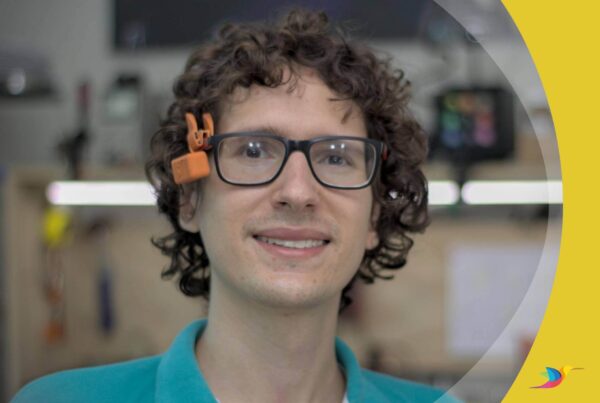
This is where Colibri comes in, a wireless head mouse designed to provide accessibility to individuals with reduced hand mobility. This device allows users to control their computer and cell phone through head movements, offering a practical and innovative solution to regain the autonomy lost due to the disease.
Tools like Colibri aim to significantly improve the quality of life for people affected by Parkinson’s disease, expanding the range of possibilities available to them by facilitating their independence and autonomy in various activities. Assistive technology, in general, not only facilitates the daily lives of those with difficulties with hand movements, but also promotes social inclusion and equal opportunities.